
reSOILution - Utilization of excavated soil for the production of earthen building materials
Short Description
Background/Motivation
The construction sector accounts for 30% of global energy consumption and 40% of greenhouse gas emissions.1 2 About 50% of all raw materials are used by the construction industry3, and the production of building materials alone causes 11% of global emissions, with 8% attributed to cement4. Since 1900, resource consumption for buildings and infrastructure has increased 23-fold5, making the sector a key lever for climate action.
Keywords such as resource scarcity, supply bottlenecks, and price increases currently characterize the construction sector, which is highly dependent on global developments. The large amount of waste generated by construction projects poses additional challenges. In 2023, excavated materials accounted for 57% of total waste in Austria (around 38 million tons), of which 21 million tons were landfilled.6
Contents and goals
A circular construction economy - from planning to reuse - is essential to reduce CO₂ emissions and energy consumption. The use of excavated soil for the production of earthen building materials helps reduce waste, conserve resources, lower CO₂ emissions, and integrate recyclable materials into construction processes. The goal of the reSOILution project is to analyse the framework conditions that enable a circular and industrialized use of excavated soils through their processing into earthen building materials.
Excavated material is usually disposed of in excavation landfills, unless it can be reused directly on-site. Although there are around 1,000 excavation landfills in Austria, only a small fraction have the necessary spatial and infrastructural conditions to store and classify material for reuse and process it into earthen building materials.
Methodical Approach
Currently, a part of the missing link project team is developing a guideline that outlines the legal, economic, logistical, and infrastructural requirements as well as a clear process chain from excavation material collection to the on-site installation of the resulting earthen building materials. This and other related projects7 form the basis for the next steps in reSOILution.
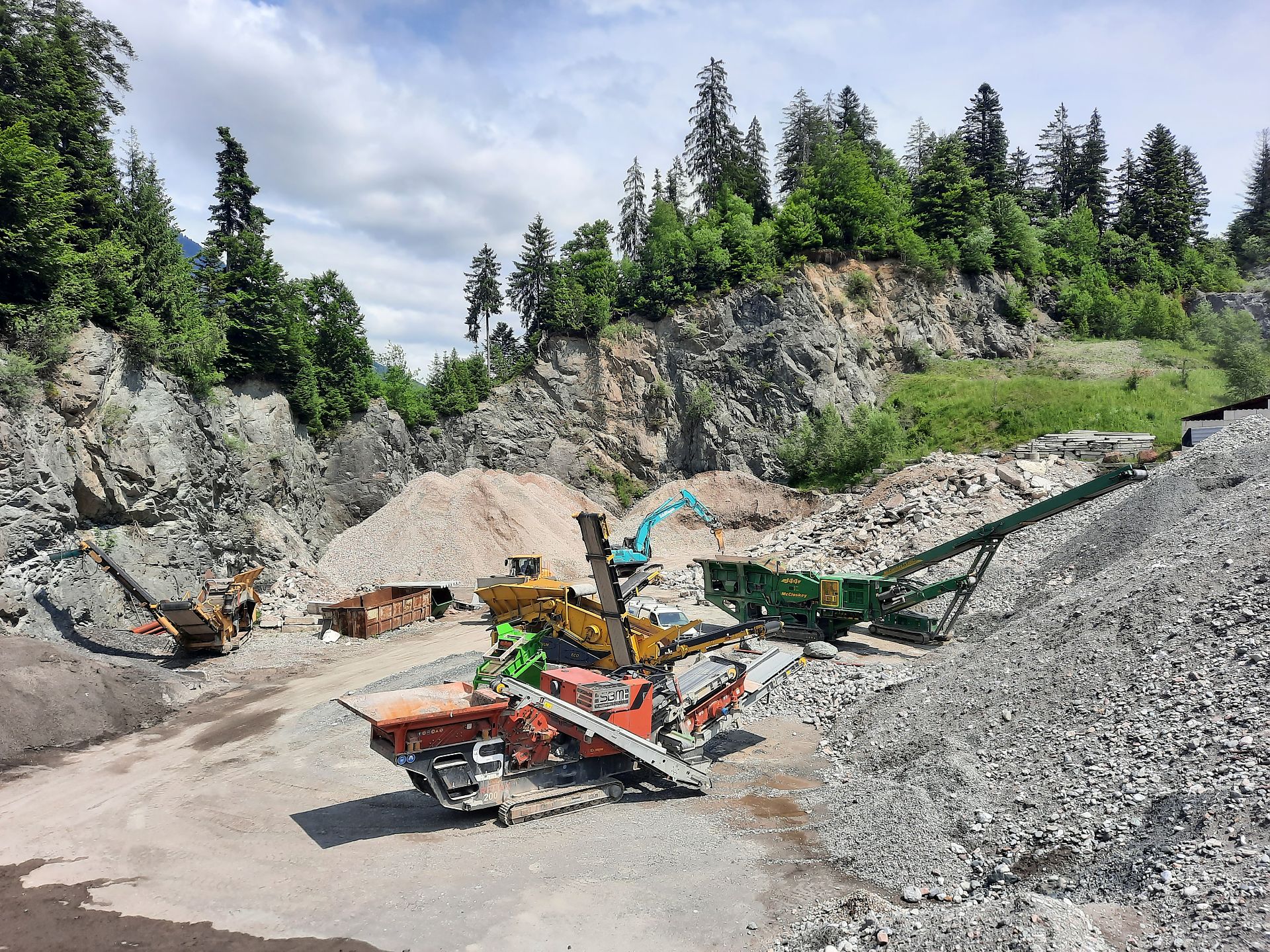
The focus will be on involving companies connected with excavation and landfill operations. Through interviews with stakeholders, potential storage and processing sites will be identified. At three example sites, mass and quality assessments of the excavated materials as well as material flow analyses will be carried out. In a stakeholder workshop, possible business models and recovery potentials will be discussed in collaboration with key actors.
In the processing of gravel and crushed stone, gravel sludge is produced as a by-product, which is currently mostly disposed of but could potentially be used in the production of earthen plasters and mortars. The project investigates to what extent this sludge can be used for earthen building material production.
Expected Results
Based on ongoing pilot projects utilizing excavated material, the necessary measures, potential challenges, and the ecological and economic impacts are being systematically recorded and documented.
The project involves stakeholders from the following sectors: earthworks, landfill operations, building material manufacturing, construction companies, gravel washing plant operators, and manufacturers of excavation and material processing equipment.
Sources
- Berardi U. 2017. A cross-country comparison of the building energy consumptions and their trends. Resour. Conserv. Recylc. 123, 230–241
- Jones K, Stegemann J, Sykes J, Winslow P. 2016. Adoption of unconventional approaches in construction: The case of cross-laminated timber. Constr. Build. Mater. 125, 690–702
- Pacheco-Torgal F, Jalali S. 2012. Earth construction: Lessons from the past for future eco-efficient construction. Construction & Building Materials, 29(1), 512–519
- Zero Carbon Industry Plan. 2017. Rethinking Cement. Cero Carbon Australia. p 7
- Krausmann F et al. 2017. Global socioeconomic material stocks rise 23-fold over the 20th century and require half of annual resource use. Proceedings of the National Academy of Sciences - PNAS, 114(8), 1880–1885
- Umweltbundesamt.at/abfall/dashboard Abruf am 17.6.2025
- u.a. Erdbewegung, NÖ LehmGuide
Project Partners
Project management
IBO - Austrian Institute for Building and Ecology GmbH
Project or cooperation partners
Netzwerk Lehm - Austrian earth building association
Contact Address
IBO - Austrian Institute for Building and Ecology GmbH
DI Ute Muñoz-Czerny
Alserbachstraße 5/8
1090 Vienna
Tel.: +43 (1) 3192005
E-mail: ibo@ibo.at
Web: www.ibo.at