
Favorite Facades Reuse
Short Description
Problem Statement and Complexity
Achieving climate neutrality requires a significant acceleration in the comprehensive renovation of the existing building stock. This is particularly crucial in urban areas that are already challenged by issues such as urban overheating due to densely built environ ments and the urgent need to implement effective climate protection measures.
Buildings constructed between the 1960s and 1980s pose a particular challenge, as energy-efficient construction was not a priority during that period. In Vienna, approximately 35,000 buildings—or about one quarter of all primary residence apartments—were built between 1961 and 1980. Social housing from this era still forms a vital backbone of the city's rental housing stock today.
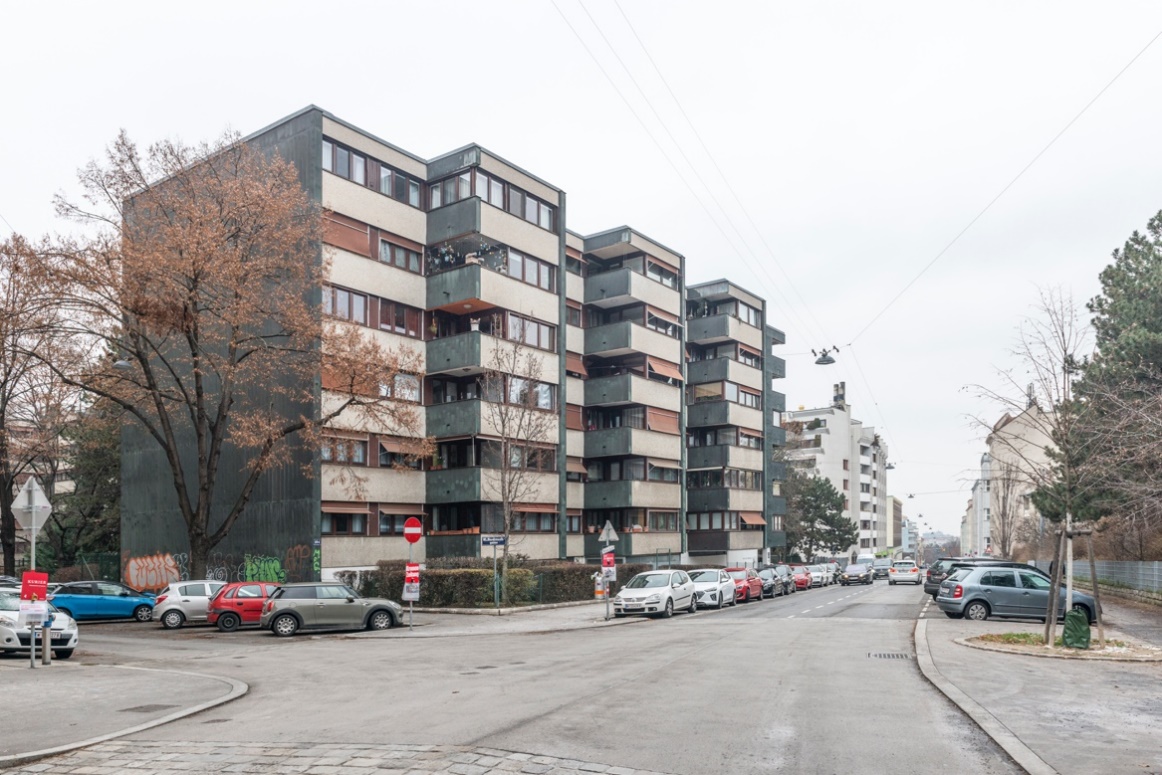
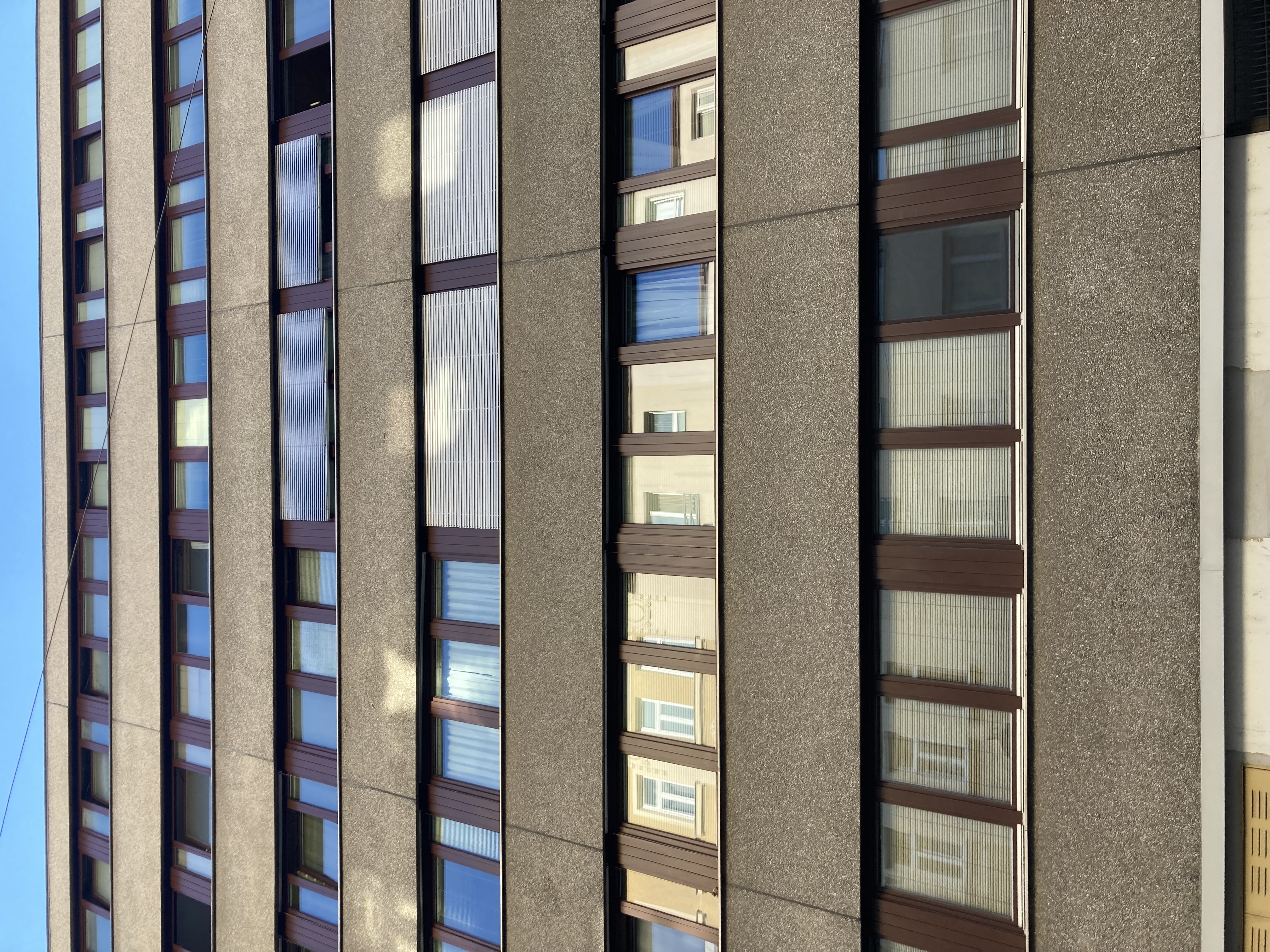
The project "Favorite Facade ReUse" explores the renovation of buildings with precast exposed aggregate concrete (washed concrete) facades and horizontal band window elements built using Schottenbauweise (a panel construction method). The high degree of prefabrication at that time was a response to the housing shortage and shortage of skilled workers in 1970s Vienna. Many of these aging buildings urgently require comprehensive thermal renovations which must be simultaneously efficient, affordable, technically feasible, scalable, and—if possible—achieved without intrusive interventions affecting occupied rental units. Only in this way can renovation rates be accelerated effectively to meet climate protection goals. Equally important is preserving and enhancing these buildings' original architectural character to maintain the cityscape and the diversity of the urban living environment.
Objectives
The investigation aims to refurbish and reuse facade components (windows and pre-cast elements) while simultaneously optimizing the building envelope from thermal and sustainability perspectives. Additionally, various facade greening options were examined and a concept for the early involvement of residents was developed.
Methodological Approach: Based on detailed analyses of the existing building stock, planning investigations were conducted alongside material and construction assessments, building physics simulations, and visualizations. Opening the building elements revealed a monolithic wall structure, which prevents insulation between the exposed aggregate concrete panels and the supporting structure. The project scope was expanded to include the entire property to incorporate densification impacts into the CO₂ balance.
Scenario analyses involving window refurbishment, window replacement, interior insulation of parapets, and exterior insulation of metal-clad panels showed that simply optimizing glazing already leads to substantial efficiency gains. Combined measures of insulation and densification can reduce heating energy demand by up to 61%. CO₂ balances demonstrate that interior insulation variants offset their emissions after about ten years, while combinations with densification offset emissions within approximately five years, establishing them as the most energy-efficient and ecological solutions. Changing the heating system was deemed unnecessary.
Results: To validate the selected renovation strategy, a pilot apartment was executed. The parapet and lintel areas were insulated from the interior, while the existing windows were retained, and only the glazing was replaced with vacuum insulating glass (Ug-value 0.5 W/m²K). Vertical and horizontal fire breaks were documented and sealed as part of the renovation.
A greening concept was developed as a cost-effective and versatile solution, involving trough-mounted climbing plants on trellis structures composed of a combination of cable systems and grid elements. Another mid-range greening option includes facade greening with trough systems or green mats. Three different approaches for tenant engagement were recommended to ensure acceptance and facilitate participation.
High Replication Potential and Densification Opportunities
The renovation variant involving interior insulation and glass replacement can be implemented easily in connection with a new rental contract without disturbing current tenants, leading to additional costs of 20–30% compared to conventional preparations for release. Replacing windows alone would cost twice as much. However, more targeted and faster progress can be achieved by implementing these measures in conjunction with early tenant engagement and rooftop densification, as well as internal layout improvements wherever possible.
Investigations into densification potential revealed an increase in usable floor area of about 50%, corresponding to approximately 100 new apartments in the pilot project at Angeligasse 97–99—well connected and created without land consumption.
Roll-Out Potential
The innovative "Favorite Facade" renovation strategy shows a high potential for broader application. The developed methodology is transferable to similar building stocks throughout Austria. From a climate protection perspective, it is recommended to strategically develop densification potentials alongside renovation efforts.
Project Partners
Project management
Arch.in Mag.a Jutta Wörtl-Gössler, RfM Räume für Menschen Architektur
Project or cooperation partners
- Arch.in Mag.a Uli Machold, RfM Räume für Menschen Architektur
- TU Wien, Institut für Werkstofftechnologie
- IBO Institut für bauen und Ökologie
- Innovationslabor RENOWAVE.AT
- GESIBA Gemeinnützige Siedlungs- und Bauaktien GmbH
Contact Address
Arch.in Mag.a Jutta Wörtl-Gössler, RfM Räume für Menschen Architektur
Wolfganggasse 12, Werkstatt
A-1120 Vienna
Tel.: +43 (680) 122 60 81
E-mail: office@rfm-architektur.at
Web: www.rfm-architektur.at